
With Father’s Day coming up soon, we decided to explore how fatherhood in the UK is evolving.
The latest figures show that in 2024, 16.7% of single parents were lone fathers, up from 13.1% in 2014. Meanwhile, as family life continues to change, more men than ever are taking an active role in raising children, whether as fathers, stepfathers, foster fathers or sole parents.
Whilst the challenges of parenthood are often discussed, less attention is paid to the positive impact fatherhood can have on men themselves. Specifically, how does becoming a dad shape identity, priorities, relationships and outlook?
To find out, we surveyed 1,000 fathers about their experiences of parenthood, including why they chose to become dads, how fatherhood has affected them, and the bonds they share with their children. The findings reveal that, for many men, becoming a father is one of the most rewarding and transformative experiences of their lives.
With Father’s Day taking place on Sunday 21st June 2026, many families will be thinking about heartfelt gifts for dad and personalised Father’s Day cards. But before celebrating the fathers in our lives, let’s take a look at the dad effect and the impact it can have.
How fatherhood changes men
One of the clearest findings from our survey is that fatherhood often acts as a catalyst for personal growth.
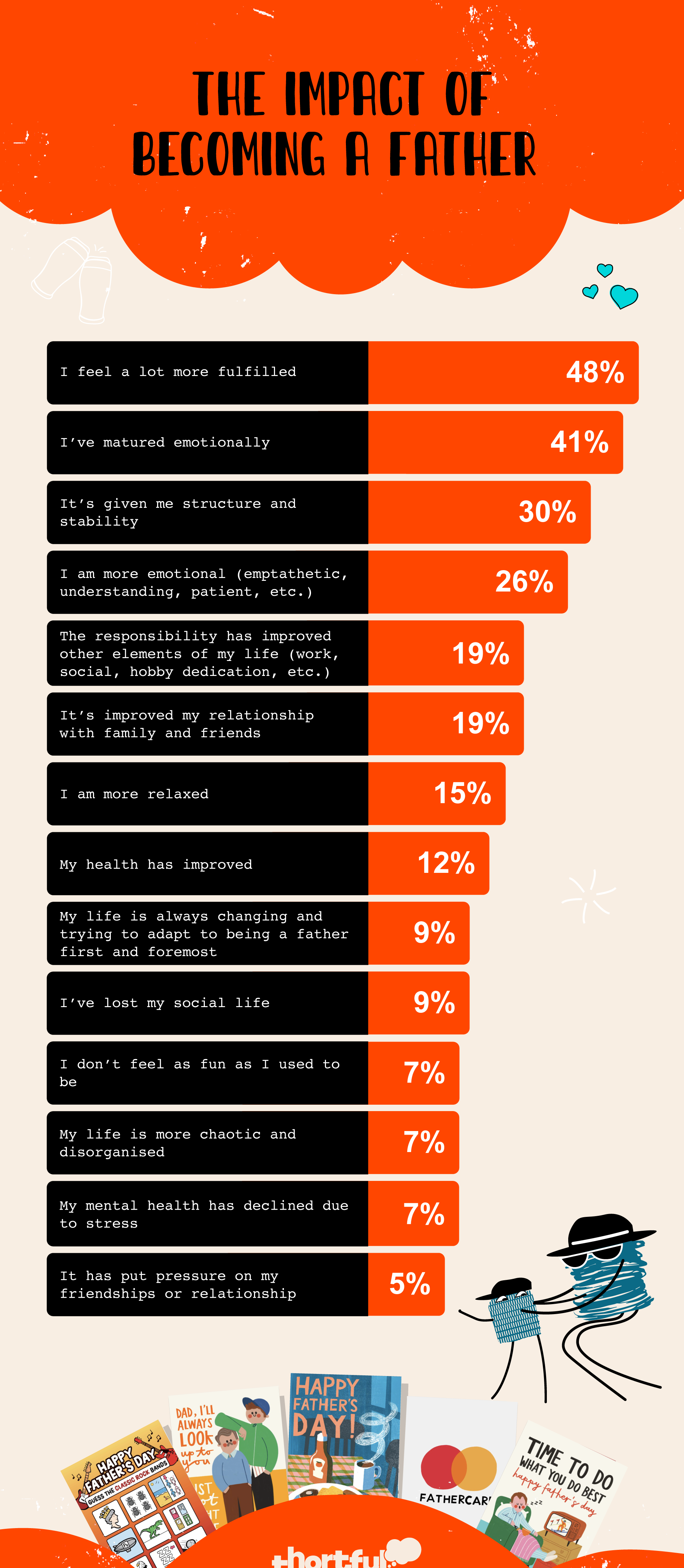
Almost half of fathers (48%) say they feel much more fulfilled since having children, making it the most common positive effect reported. Meanwhile, 41% say becoming a dad has helped them to mature emotionally, suggesting that parenthood often encourages men to develop greater self-awareness and emotional intelligence.
For many, fatherhood also provides structure. Three in ten dads (30%) say that parenthood has brought stability and routine into their lives, whilst 26% believe it has made them more empathetic, understanding and patient.
The benefits extend beyond parenting itself. Nearly one in five fathers (19%) say becoming a parent has improved their relationships with family and friends, and 12% report improvements to their physical health.
However, the transition to fatherhood isn’t without its challenges.
Nine per cent of fathers say that they have lost part of their social life since having children. A further 7% say they don’t feel as fun as they once were, 7% describe their lives as more chaotic, and another 7% say their mental health has declined because of the stress and pressure that can come with parenting.
Taken together, the findings paint a realistic picture. Fatherhood can be hugely rewarding and life-enhancing, but it also requires adjustment. For many dads, the challenge lies in balancing responsibility, personal wellbeing and family life.
Why do men want to become fathers?
Our survey also explored the motivations behind fatherhood and found that most men are driven by a desire for connection, purpose and family.
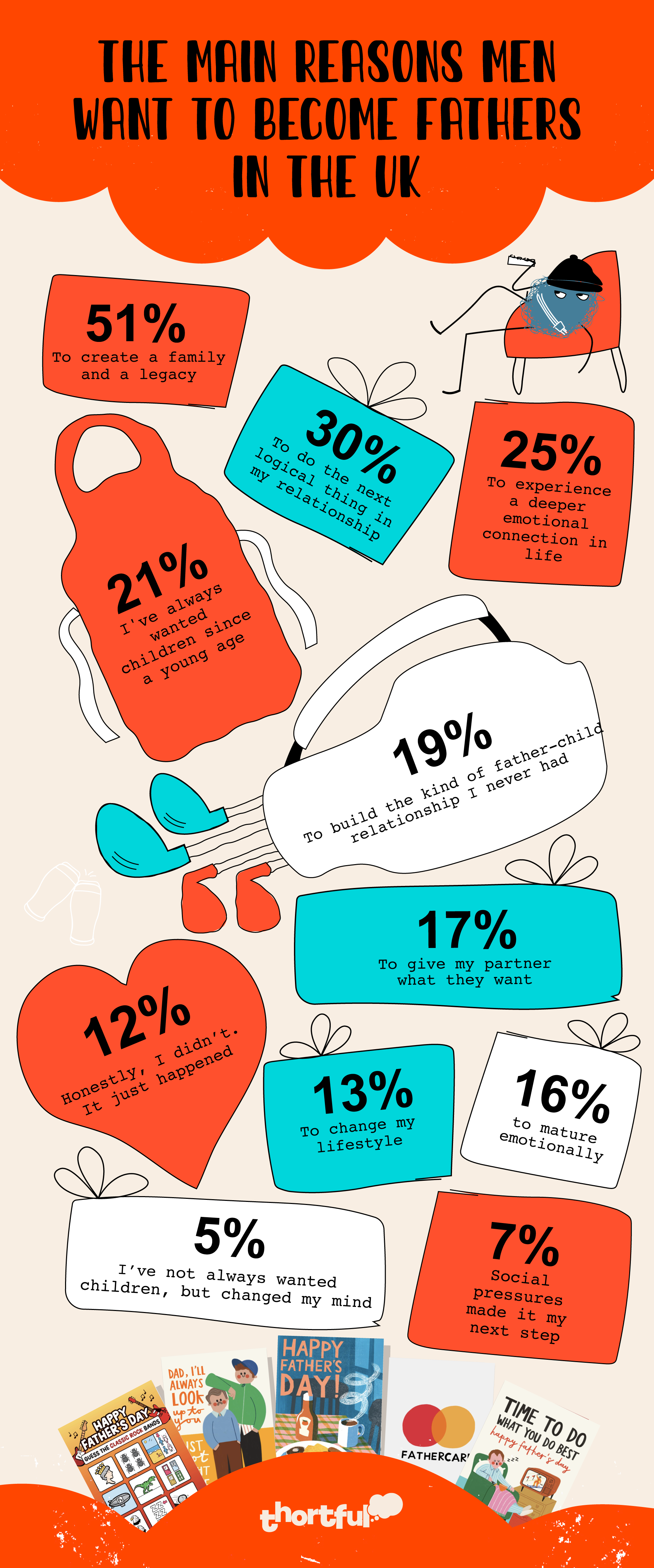
More than half of fathers (51%) say they wanted to create a family and leave a legacy. For many, parenthood represents the opportunity to build something meaningful that extends beyond their own lives.
Thirty per cent say having children felt like the next logical step in their relationship, whilst 25% wanted to experience a deeper connection in life. A further 21% say they had always wanted children from a young age, highlighting how fatherhood remains a lifelong aspiration for many men.
Digging deeper into the emotional motivations behind parenthood reveals some particularly powerful findings. Nineteen per cent of fathers say they wanted to create the father-child relationship that they never experienced themselves. This suggests that many men see parenthood as an opportunity to break negative cycles and provide the support, guidance or affection they may have missed growing up.
Meanwhile, 17% say they wanted to give their partner what they wanted, 16% hoped fatherhood would help them to mature emotionally, and 14% viewed becoming a parent as an opportunity to change their lifestyle.
Interestingly, relatively few fathers cite external factors as a major influence. Just 7% say social pressure contributed to their decision to have children, whilst 5% say they never originally wanted children but changed their minds later in life.
Overall, the findings suggest that fatherhood is usually a conscious and deeply personal choice rather than something that men simply drift into.
What’s the bond like between fathers and their children?
The relationship between a father and child is often one of the most important connections in family life, and our survey reveals a wide range of experiences.
Encouragingly, more than half of fathers (56%) say they’ve always enjoyed a great bond with their kids. This suggests that many dads feel emotionally connected and actively involved in their children’s lives from an early stage.
However, emotional communication remains a challenge for some. Almost one in five fathers (18%) say they love their children deeply but rarely express those feelings openly.
Others are still working on strengthening their relationships. 13% say they’re struggling to connect with their children, whilst 11% say they’re actively working on their bond but don’t feel it’s quite where they would like it to be yet.
The research also highlights some of the wider sacrifices that can accompany parenting. Eight per cent of dads say that although they have an excellent relationship with their children, they’ve lost connections with friends and family as a result. A further 5% say they simply feel too busy to focus on improving their bond with their children.
The findings serve as a reminder that strong relationships rarely happen automatically. They require time, communication and effort, which is something that many fathers are actively investing in as parenting expectations continue to shift.
It’s often these relationships that inspire children and partners to search for meaningful Father’s Day cards to express appreciation for everything dads do behind the scenes. If you’re looking for inspiration, check out our guide on what to write in a Father’s Day card.
How are modern fathers are different from previous generations?
The role of fathers has changed dramatically over the last few decades. A huge 69% of fathers surveyed believe that dads are expected to be more emotionally involved with their children today compared with previous generations.
So, what does modern fatherhood actually look like? The most common difference identified by respondents is spending more quality time together, with 36% of fathers highlighting this as a key change. A further 33% believe that modern dads encourage more open communication, whilst 28% say fathers today are more emotionally open themselves.
Patience also appears to play a greater role, with 26% saying modern fathers are more patient than previous generations. Meanwhile, 23% believe that dads are now more likely to openly say “I love you” to their children, helping to create stronger emotional bonds.
Twenty per cent say fathers today encourage more honest conversations, whilst 17% believe that parenting responsibilities are shared more equally between parents than they were in previous generations.
Other differences include being less strict (16%), teaching children greater independence (16%), and placing more emphasis on mental wellbeing (11%).
Every dad needs support sometimes
Whilst many fathers describe parenthood as one of the most fulfilling experiences of their lives, it’s important to acknowledge that not everyone finds it easy all of the time.
Our survey found that some fathers feel isolated, overwhelmed or under pressure, with a proportion reporting reduced social lives, increased stress and challenges to their mental wellbeing.
If you’re struggling, you’re far from alone. Talking openly with trusted friends, family members or your partner can make a significant difference. Many fathers also benefit from joining parenting groups, local dad communities or online support networks where they can connect with people facing similar experiences.
Organisations such as Dad Matters, Family Lives, Fathers Network Scotland and Hub of Hope provide advice, resources and support for fathers across the UK. Whether you’re looking for parenting guidance, emotional support or simply reassurance that what you’re experiencing is normal, help is available. Parenthood doesn’t come with a handbook, and seeking support is a sign of strength, not weakness.
Celebrating fatherhood this Father’s Day
The findings from our survey show that becoming a father can have a profound impact on men’s lives.
For many, it brings greater fulfilment, emotional maturity, patience and purpose. It also encourages stronger family relationships, deeper emotional connections and a fresh perspective on what really matters.
At the same time, the results remind us that fatherhood isn’t always straightforward. Like any important role in life, it comes with challenges, sacrifices and moments of uncertainty.
This Father’s Day, whilst celebrating the dads, stepdads, foster dads and father figures who make a difference every day, it’s worth recognising something else too: the remarkable ways that fatherhood changes the people doing the parenting.
Whether you’re searching for funny Father’s Day cards or unique gifts for dad, the occasion is ultimately about showing how much you love and appreciate him.
Before you go, why not check out the rest of our blog? There you’ll find inspirational Father’s Day quotes as well as happy heavenly Father’s Day wishes for those looking to remember their dad this Father’s Day.